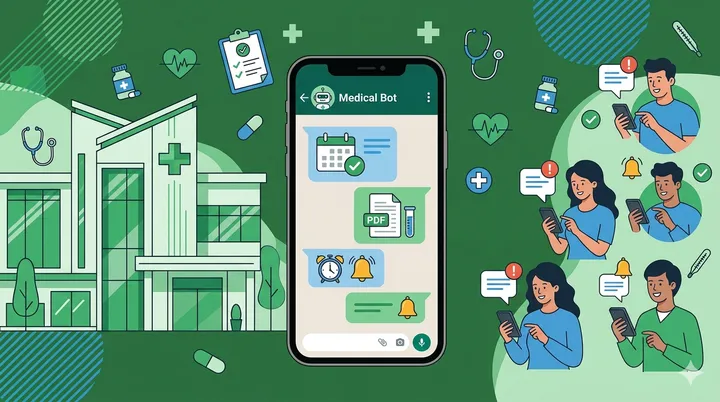
It’s 9:47 AM at the front desk of a 200-bed multispecialty hospital in Pune. The receptionist is on hold with a TPA, three patients are waiting to collect lab reports, a fourth is asking whether Dr. Iyer’s OPD has been moved to the second floor this week, and the printer just jammed on a discharge summary. None of this is unusual — this is a Wednesday.
Every one of those interactions has a version that doesn’t need a human at all. The report handover, the OPD floor change, the discharge PDF. The TPA hold call is genuinely hard. The rest are just information the hospital already has, sitting inside the HMS, waiting to be routed to the patient in a form they’ll actually open.
The interesting engineering problem isn’t picking a messaging channel. It’s connecting it to the systems that hold your real clinical and billing state — Napier, Suvarna, MediXcel, Insta HMS, DrPro, or whatever your HMIS happens to be — so the automation reflects current data instead of yesterday’s export. A bot that quotes a slot reception has already blocked, or promises a report the LIS hasn’t released yet, actively makes the front desk’s day worse. If you’re new to the mechanics of WhatsApp on the business side before we dig into HMS integrations, our complete guide to WhatsApp automation for business is the place to start.
HMS-Integrated Workflows That Actually Save Time
The question isn’t whether messaging works for healthcare. The question is whether the automation is wired to the systems that hold the clinical data — because a chatbot that can’t see today’s OPD schedule or read whether a report is ready is just an expensive FAQ page.
The HMIS is the source of truth, not the bot. Whatever you’re running — Napier, Suvarna, MediXcel, Insta HMS, Backbone, DrPro — that’s where the appointment list, doctor roster, lab TAT, and billing state live. Real automation reads from it in near real-time. If the bot tells a patient “Dr. Kulkarni is available at 4 PM” and reception has already blocked that slot, the automation just cost you a phone call, not saved one.
Rich media closes the loop. Discharge summaries, radiology reports, prescription PDFs, physiotherapy demo videos — WhatsApp handles all of them natively. The alternative is asking a patient’s family to log into a portal to fetch a file they’ll then screenshot and forward anyway.
Two-way is where the value hides. SMS reminders trim no-shows a little. A WhatsApp reminder with a reschedule button turns a would-be no-show into a rebooked slot, which is a completely different economic outcome. Small teams we’ve worked with target a 25-30% reduction in first-time no-shows in the first quarter after wiring reminders to their scheduler; whether you actually hit that depends heavily on patient mix and reminder cadence.
Encryption is a checkbox, not a compliance strategy. WhatsApp is end-to-end encrypted between endpoints, which is good. But if you’re sending anything that qualifies as sensitive personal data under the DPDP Act — reports, diagnoses, PHI — you need a stated consent flow and a data-processing agreement with whoever is running the automation on your behalf. More on that in the rollout section at the end.
10 WhatsApp Automation Use Cases That Actually Matter
Let’s get into the specifics. These aren’t theoretical ideas — they’re workflows that hospitals, diagnostic labs, and clinics across India can implement today.
1. Appointment Booking and Scheduling
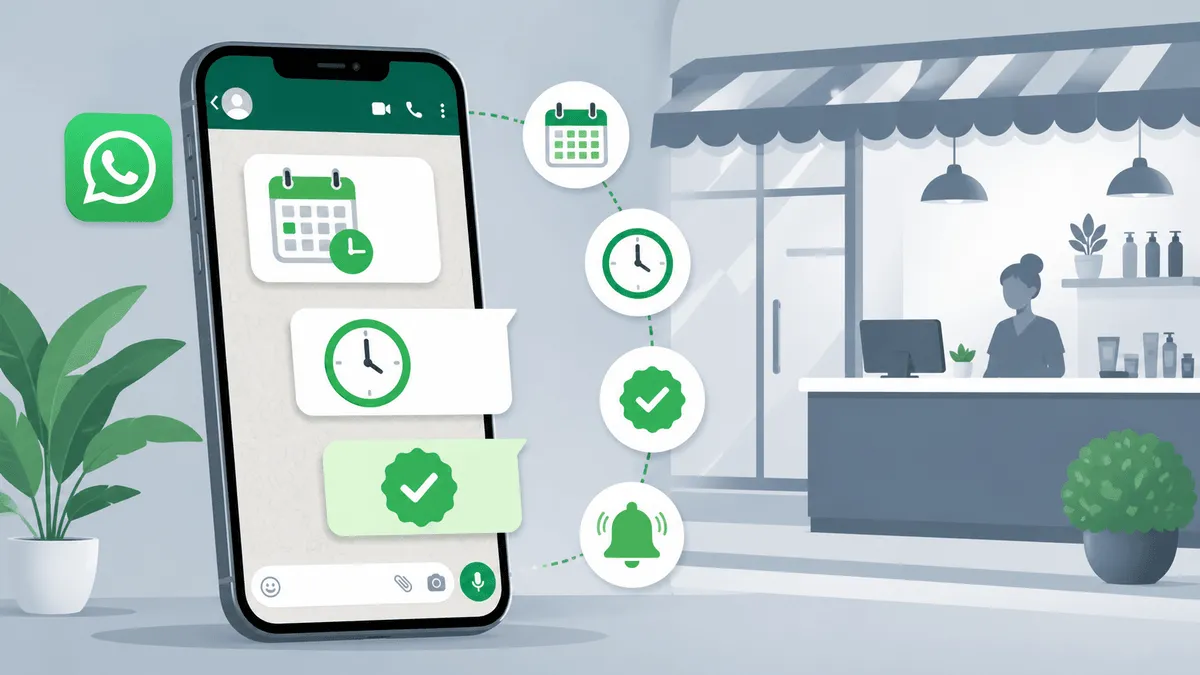
This is the most obvious starting point, and for good reason. Phone-based appointment booking is painful for everyone involved. The patient waits on hold, the receptionist juggles multiple calls, and mistakes happen. A capacity-aware WhatsApp appointment booking system removes that bottleneck by handling slots, confirmations, and reminders automatically.
With WhatsApp automation, the flow looks something like this:
- Patient messages the hospital’s WhatsApp number
- Bot greets them and asks: “What would you like to do?” with options like Book Appointment, Check Reports, Talk to Support
- Patient selects “Book Appointment”
- Bot shows available departments — Cardiology, Orthopedics, General Medicine, etc.
- Patient picks a department, then selects a doctor from the available list
- Bot shows available time slots for the next few days
- Patient confirms, receives a booking confirmation with date, time, doctor name, and any pre-visit instructions
The entire process takes under two minutes. No hold music. No miscommunication. And the hospital’s front desk staff can focus on the patients who are physically present instead of being glued to the phone.
2. Appointment Reminders and Reducing No-Shows
No-shows are a real problem. When a patient doesn’t turn up for a scheduled appointment, that’s a slot wasted — revenue lost, and another patient who could’ve been seen wasn’t. Research suggests that automated reminders via SMS or WhatsApp can reduce no-show rates by 20-30%, depending on the setting and patient demographic.
A solid reminder workflow sends two messages: one 24 hours before the appointment and another 1-2 hours prior. Each message includes the appointment details and — this is the key part — a quick reply option to confirm or reschedule. Something like:
“Hi Priya, this is a reminder for your appointment with Dr. Mehta (Dermatology) tomorrow at 11:00 AM, Block B, 3rd Floor. Reply CONFIRM to confirm or RESCHEDULE to pick a new time.”
That reschedule option turns a potential no-show into a rebooked appointment. The slot opens up for someone else, and the patient doesn’t feel guilty about cancelling because the process is frictionless.
3. Lab Report and Test Result Delivery
Most diagnostic chains and hospital labs in India still rely on web portals or physical collection for report delivery. The problem? Many patients, especially older ones, forget their portal credentials or simply don’t bother logging in.
WhatsApp solves this beautifully. As soon as a report is ready, the system sends a WhatsApp message with the PDF attached. The patient gets a notification they can’t miss, opens the report right there, and can share it with their doctor instantly.
For diagnostic labs processing hundreds of reports daily, this also cuts down on front-desk queries. “Is my report ready?” calls drop dramatically when patients know they’ll be notified on WhatsApp the moment results are available.
4. Prescription Reminders and Medication Adherence
The World Health Organization has noted that medication adherence for chronic diseases averages around 50% in developing countries. That’s a staggering number. Half the patients prescribed medication for conditions like diabetes, hypertension, or thyroid disorders aren’t taking it consistently.
Automated WhatsApp reminders won’t fix this entirely, but they help. A daily message at 8 AM saying “Good morning, Ramesh. Time for your Metformin (500mg). Take it with breakfast.” is simple, personal, and hard to ignore when it pops up on the same app you check fifty times a day.
For hospitals running chronic disease management programs, this kind of automation can meaningfully improve patient outcomes without adding workload to the care team. You set it up once per patient, and it runs on autopilot.
5. Pre-Visit Instructions
Every healthcare professional knows the frustration: a patient shows up for a fasting blood test having eaten breakfast, or arrives for an MRI wearing metal jewellery, or forgets to bring their insurance card. The appointment gets delayed or rescheduled, wasting time for everyone.
Automated pre-visit messages fix this. When an appointment is booked, the system sends relevant preparation instructions based on the type of visit:
- Blood test: “Please fast for 10-12 hours before your test. You may drink water. Carry your prescription and a valid ID.”
- Surgery prep: “Do not eat or drink anything after midnight. Wear loose, comfortable clothing. Bring your insurance documents and ABHA card.”
- First OPD visit: “Please carry all previous medical records, current medication list, and a valid photo ID. Arrive 15 minutes early for registration.”
These messages go out automatically based on the appointment type. No manual effort required. And the reduction in day-of confusion is significant.
6. Post-Discharge Follow-Up
What happens after a patient leaves the hospital matters just as much as what happens inside it. Poor post-discharge follow-up is a well-documented contributor to hospital readmissions, and readmissions are expensive — both for the patient and the institution.
WhatsApp automation enables structured post-discharge check-ins. A patient who’s had knee replacement surgery might receive:
- Day 1 post-discharge: Wound care instructions, medication schedule, and a reminder to keep the operated area elevated
- Day 3: “How are you feeling? Any swelling, redness, or unusual pain around the surgical site? Reply YES if you have concerns and we’ll connect you with the care team.”
- Day 7: Reminder about the follow-up appointment with the surgeon
- Day 14: Physiotherapy exercise video and a check-in on mobility progress
This kind of proactive outreach makes the patient feel cared for, catches complications early, and strengthens the hospital’s reputation for quality aftercare. Major hospital networks like Apollo, Fortis, and Max are all investing heavily in patient engagement for exactly this reason — post-discharge is where loyalty is built.
7. Health Package and Wellness Campaign Broadcasts
Hospitals and diagnostic labs run seasonal promotions constantly — monsoon health checkups, diabetes screening camps, annual wellness packages, vaccination drives. Traditionally, these campaigns rely on newspaper ads, SMS blasts, and maybe some social media posts.
WhatsApp broadcasts are dramatically more effective for this kind of campaign. In diagnostic-chain campaigns we’ve helped set up, a well-segmented broadcast to lapsed patients typically converts at 3-5x the rate of the same offer sent by SMS or email — mostly because the message is opened and skimmed within the first hour, not because the offer is better. A template about a discounted full-body checkup, sent to patients who last visited eleven months ago, is close to the highest-yield outreach you can run.
The key is segmentation. Don’t blast the same message to everyone. Send diabetes screening offers to patients with a family history. Promote cardiac checkups to men over 40. Target women’s health packages to relevant demographics. WhatsApp automation platforms let you segment your patient database and personalise broadcasts accordingly.
8. Insurance and Billing Queries
If you’ve ever worked at a hospital front desk, you know that insurance and billing questions consume an enormous amount of staff time. “Is this procedure covered under my policy?” “What’s the estimated out-of-pocket cost?” “What’s the status of my TPA approval?” “Can I get an itemised bill?”
A WhatsApp chatbot can handle the most common billing and insurance FAQs instantly. It can provide estimated costs for standard procedures, explain what documents are needed for cashless claims, share the list of empanelled insurance providers, and give real-time updates on TPA approval status if integrated with the hospital’s billing system.
For anything too sensitive for automation — disputed charges, claim rejections, special approvals, discretionary discounts — the system escalates into the billing team’s shared inbox with the patient’s ledger snapshot attached. The routine layer clears out standard estimates, cashless-document checklists, and TPA status pings so the billing team is only handling the cases where their judgement actually matters.
Cutting no-shows and TPA-form chaos on WhatsApp?
Inceptimind wires appointment reminders, discharge-summary delivery, and TPA/insurance status queries into your existing HMS — no dev team required. OPD workflows, lab report broadcasts, and DPDP-aware consent flows from ₹399/mo.
Get Started Today9. Doctor Availability and OPD Information
One of the most common reasons patients call a hospital is simply to check if a specific doctor is available on a particular day. “Is Dr. Sharma available this Saturday?” “What are the OPD timings for the ENT department?” “Which doctors are available for paediatrics in the evening?”
These are perfectly structured queries that a bot handles better than a human. The bot pulls from the hospital’s scheduling system and gives an instant, accurate answer. No hold time, no transfers between departments, no outdated information from a receptionist working off last week’s schedule.
Patients can check availability, see consultation fees, and book directly — all within the same WhatsApp conversation. For multi-specialty hospitals with dozens of doctors across multiple departments, this alone can cut phone call volume substantially.
10. Patient Feedback Collection
NABH accreditation requirements push hospitals to collect patient feedback systematically. But feedback forms at the discharge counter get filled out halfheartedly, email surveys go unopened, and phone-based surveys are expensive and intrusive.
WhatsApp feedback requests see significantly higher response rates than email. A simple message sent a few hours after the visit — “Hi Ananya, thank you for visiting City Hospital today. How would you rate your experience? Reply with a number from 1 (poor) to 5 (excellent).” — takes seconds to respond to. Follow up with an open-ended question for those who rate below 4, and you’ve got actionable feedback flowing in automatically.
Hospitals pursuing or maintaining NABH accreditation can use this data directly in their quality improvement processes. And for any healthcare provider, understanding patient satisfaction in near real-time is invaluable — you can catch service issues before they become patterns.
The 30-Day Rollout Playbook for Hospitals
Don’t try to switch on all ten use cases in week one. The hospitals that make this stick are the ones that stage it deliberately.
Week 1 — Pick two workflows and one department. Appointment reminders for a single specialty (Cardio or Ortho OPD works well because slot value is high) plus lab-report delivery for the in-house diagnostic lab. Two workflows, one department, one week. Any more and you’ll fail the pilot.
Week 2 — Wire the integrations. Connect the platform to the HMIS’s appointment table and the LIS’s report-ready webhook. If your HMS vendor charges for an API — Suvarna, MediXcel, and Napier typically do — bake that into the pilot budget. Without integration you’re doing manual CSV uploads, which nobody sustains past week three.
Week 3 — Go live in shadow mode. Send messages, but let the human reminder call keep happening in parallel. Compare confirm/reschedule rates between the two. This is the week you catch template rejections, wrong phone numbers, and language mismatches without exposing them to your whole patient base.
Week 4 — Cut over and measure. Turn off the manual reminder calls for the pilot department. Track three numbers: no-show rate, average handle time for report queries, and response rate on your post-visit feedback template. If any of them are worse than pre-pilot baseline, you don’t expand — you fix.
Get WhatsApp Business API access properly. The regular WhatsApp Business app maxes out around a five-person clinic. Anything bigger needs the Cloud API — multi-agent inbox, template management, conversation-based billing. Our WhatsApp API pricing breakdown for India walks through the numbers; most automation platforms, including Inceptimind, handle the API onboarding as part of setup.
Nail the DPDP Act consent layer before you scale. Under the Digital Personal Data Protection Act, health and treatment information counts as sensitive personal data, and it needs an explicit, purpose-linked consent from the patient before you route it over a third-party channel. In practice: the very first outbound message should be a bilingual opt-in template (“Do you want to receive appointment updates and reports on WhatsApp? Reply YES to continue”), stored against the patient record, and revocable at any time. Skipping this is the fastest way to turn an efficiency win into a regulatory problem.
What to Measure in the First 90 Days
If you take away one thing, take away this: don’t judge the automation on how the bot sounds. Judge it on numbers your CFO already tracks.
- No-show rate for the pilot department. Baseline it for the four weeks before go-live, then compare. Aim for a 20-25% reduction inside the first quarter; anything above 30% is a strong quarter.
- Cost per report delivered. Front-desk handover time, courier costs, portal support tickets — total them before you switch on lab-report delivery, then compare after 60 days. A well-run diagnostic lab typically halves this line.
- NABH-eligible feedback response rate. Sent-versus-responded on your post-visit feedback template. Above 40% is a healthy baseline; below 20% and the template copy or the send-time is wrong.
- Human-agent escalation rate. If more than roughly a third of conversations end up with a live agent, the flows are too shallow. If fewer than 5% escalate, the flows are probably too rigid and are pushing patients toward frustration.
Bigger hospital networks are already investing in this layer for exactly these numbers, and other verticals run the same operational logic — real estate teams are working similar chatbot funnels for site-visit booking. Healthcare’s version has stricter data implications and higher stakes per conversation, but the shape of the work is identical: pick a workflow, wire it to the source of truth, measure the number that would have moved anyway, and only expand once it does.